
What Makes a Haircut Grow Out Well Between Visits?
A haircut grows out well when its shape is planned around how your hair falls, where it holds weight and which way it grows. A cut that only looks right under a round brush the day you leave was styled well. It was not built to last.
At Maven Salon in Old Saybrook, we judge a cut by how it looks weeks later, in your own mirror, on a rushed morning. That's the hair you live in. It's also the hair we plan for.
Why Do Some Haircuts Still Look Good Weeks Later?
A haircut grows out well when its weight, perimeter and layers are placed for your hair, not just the finished blowout. Hair grows at the root, so the whole shape slides down a little every week. A good cut plans for that slide. It lands somewhere flattering instead of collapsing into a heavy line, a puff at the ends, or a piece that stands up.
Most hair grows around half an inch a month. That growth is even from root to tip, so your layers keep the same spacing between them. What changes is where each one hits. A face-framing piece cut at your cheekbone drifts toward your jaw. A bob that grazed your chin starts touching your collar.
That's why the planning happens before the scissors come out. Ask where a cut will sit after a month of growth, not only where it sits today. If the answer is a place you'd happily wear, the cut was built to grow out.
Shape controls lift, too. We've said it in our own captions: "Your haircut might be why your hair won't hold volume, not your products." When weight sits in the wrong spot, it drags the top flat as the cut grows. No mousse can lift it back.
Your Growth Pattern Decides Where the Weight Lands
Every head has spots where hair grows its own way, and a cut that fights them falls apart first. The usual spots are the crown, the nape and the front hairline. A cowlick at the crown can make a short layer stand straight up once it gets a little length. A swirl at the nape can push a short back outward instead of letting it lie down.
What We Look at Before We Cut
Before a haircut, we watch how your hair behaves on its own. Where does your part fall when nobody places it? Does the crown split open? Does the front lift or lie flat?
Those answers tell us where to keep length. A stubborn spot needs enough weight to sit down as it grows. Cut it too short and it will fight you every morning until it grows back.
Why the Weight Line Matters
The weight line is where a cut holds most of its bulk. On a blunt shape, it sits at the ends and keeps them full. On a heavily stacked shape, it sits higher, near the back of the head.
As stacked weight grows down, it can turn into a shelf or a round puff. Placing that line with growth in mind is the difference between a cut that softens and one that turns boxy. Small choice. Big difference by week four.
How Do Different Haircuts Grow Out?
Some haircuts are built to stretch between visits, and others need regular shape-ups to stay what they are. Neither is wrong. It comes down to how often you want to sit in the chair.
In our chairs, a stacked bob, a blunt fringe and a pixie come back for shape-ups more often than long layers do. That's a pattern, not a rule. Your stylist will set your own rhythm at the consultation, based on your hair and how you wear it.
Long Layers
Long layers grow out in the most forgiving way. The layers get longer and the shape stays soft. They suit most textures on hair that falls below the shoulders.
Upkeep is mostly about the ends. Keep them healthy and the shape holds well between cuts.
A Blunt Bob or Lob
A blunt bob keeps a solid line at the bottom, and that line keeps fine hair looking full as it grows. It suits straight and fine hair especially well. As it grows past the chin, a bob turns into a lob, which plenty of guests enjoy as a second look.
The catch is the shoulders. Once the ends start to flip outward there, the line needs a shape-up.
A Stacked or Graduated Bob
A stacked bob is short and lifted at the back, and it needs the most frequent visits of any shape here. The lift comes from tightly built layers at the nape. Grow those out and the back gets heavy and round.
It suits guests who love a crisp, polished look and plan regular appointments. Want less upkeep? Say so at the consultation. Your stylist can soften the stack so it grows out gentler.
Curtain Bangs
Curtain bangs part in the middle and sweep to each side, and they grow out more easily than any other fringe. As they lengthen, they blend into face-framing pieces. That makes them a low-risk way to try bangs for the first time. They sit nicely on wavy texture.
A Blunt Fringe
A blunt fringe sits straight across the brow, and it reaches your eyes fast. It needs trims more often than the rest of your haircut.
It suits straight hair without a strong cowlick at the front. If your hairline has one, the fringe will split or lift as it grows. Curtain bangs are often the kinder choice there.
A Pixie
A pixie has the least room to grow, so a small change shows quickly. The shape lives around the ears and the nape, and those areas get fuzzy first. A pixie suits guests who love short hair and like coming in often. Growing one out takes a plan, which the FAQ below covers.
Our haircuts and styling page covers our cuts, blowouts and special-occasion styling. You can also see how real cuts on real guests settle on our Instagram.
Texture and Density Change the Plan
The same cut grows out in opposite ways on fine hair and thick hair. That's why a photo of someone else's haircut is a starting point, not a blueprint.
Fine Hair
Fine hair grows out well with fewer layers and a fuller perimeter. Too many layers leave the ends see-through, and that thinness gets worse as the cut grows. Heavy thinning with texturizing shears does the same thing.
On fine hair, we'd rather keep weight at the bottom and add movement near the face. The ends stay full. The face still gets shape.
Thick Hair
Thick hair needs bulk removed from the inside so it doesn't grow into a triangle. When only the outside gets shortened, the volume stays and spreads wider. Taking weight from under the top layers lets the hair fall closer to the head as it grows.
One guest with thick, curly hair wrote in a Google review that the cut gave their hair better shape and movement. They added that it felt much lighter and less full afterward.
Curly and Wavy Hair
Curly and wavy hair shrinks as it dries, so the length you see wet is not the length you live with. A curly haircut works when it's judged with the curl showing. Layers placed for the curl pattern let each section spring evenly.
Cut without that in mind, curls can grow into a heavy bottom with a flat top. You'll know the look. It's the one people fight with diffusers and clips.
What Happens at Your Haircut Appointment
Every haircut at Maven Salon starts with a consultation, because every service here is personalized to you before anything gets cut.
The worry we hear most from new guests is simple. They've tried new stylists before and left disappointed. Some describe years of showing one inspiration photo from chair to chair. Another guest wrote in a Google review that they'd carried the same photos to stylists for close to a decade before their hair goals felt in reach.
Here's what's true about that. A cut that keeps missing usually wasn't built from your hair. The photo got followed, but your growth pattern, density and routine didn't. So the conversation comes first.
The Consultation
Bring your inspo, and bring the truth about your mornings. We'll ask how long you spend styling, whether you air dry, and how your last cut grew out. A photo of your hair on a good day helps as much as any inspiration picture.
Before we start, we repeat back what you asked for in plain words. If anything sounds off, that's the moment to say so.
The Cut and the Finish
Every haircut ends with our Signature Blowdry, the finish we do on every color, cut and styling service. You can read what our Signature Blowdry includes in its own post. That finish matters for grow-out, too. It shows how the shape sits when it's styled, so you can ask how to recreate it at home.
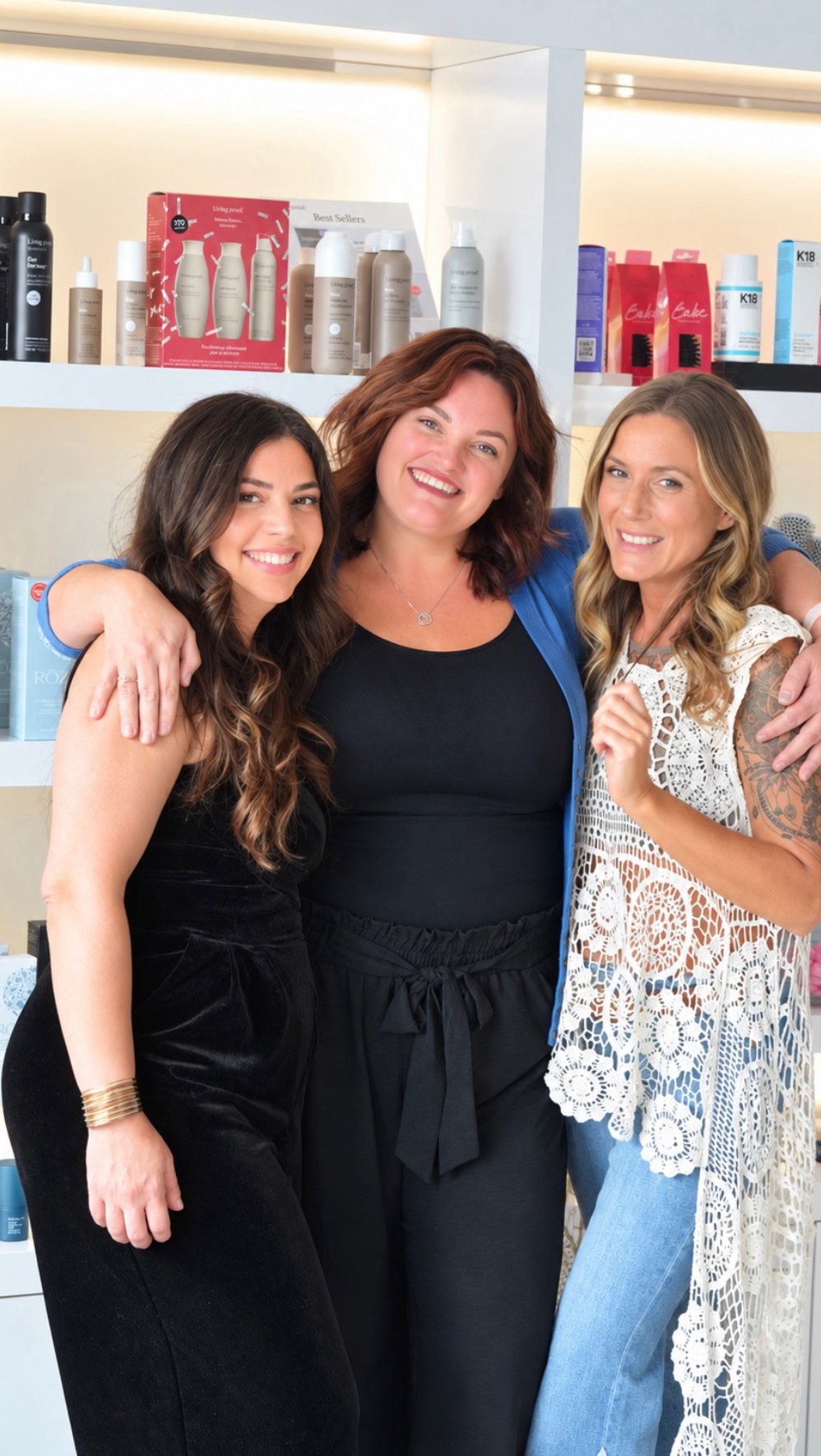
Guests also mention the small things in their reviews. A head massage at the wash. A warm blanket. A cold drink.
When You Leave, and Two Weeks Later
You'll leave with the shape styled and polished. At home, the first wash shows the cut without the blowout. That's the real test, and a well-built cut passes it.
Two weeks in, your hair has grown roughly a quarter inch. A cut planned for growth often looks more settled by then, because the edges have softened. If it looks worse instead, call us. That tells us something about your hair worth knowing.
If You're New to Maven
New guests can start with First-Time Guest Services, which gives us extra time and attention to get to know your hair and reach the result you want. Not sure what to book or who to book with? Call or text the salon at (860) 552-6435. The stylist matchmaking survey on our site can also help you find a fit.
Our Old Saybrook haircut page covers what's included with a cut. Current prices live on our service menu, and they vary by stylist, hair length, density and current hair condition.
How Color and Cut Grow Out Together
A cut and color planned together grow out as one shape instead of two separate problems. A hard root line on a blunt bob shows up fast, because both lines pull the eye at once. Soft, hand-placed color hides the grow-out of the cut and the root together.
That's the thinking behind dimensional color that grows out softer. Our owner describes the whole goal as "real life hair that grows out beautifully," and the cut and color share that job.
Gray works the same way. Blending gray instead of covering every strand keeps the root from fighting your shape as it grows. Our post on why gray coverage looks flat walks through that choice.
Damaged ends shorten a cut's life as well. Bleached or heat-worn ends split and frizz, and the shape looks rough before the length has changed at all. Our post on what K-18 does for damaged hair explains how that treatment works on worn strands between cuts.
What People Get Wrong About Growing Out a Haircut
The most common mistake is skipping trims to grow hair faster, and it usually costs length. Hair grows from the scalp, so trimming the ends doesn't slow it down. These are the habits that cost the most.
- Skipping trims to save length. Split ends climb the strand, and the next cut has to take more than a small trim would have.
- Asking for "a trim" when the shape needs moving. A trim takes length off the bottom. A grow-out often needs weight moved at the back or crown.
- Trimming bangs at home. Wet bangs shrink as they dry, so a home trim lands shorter and choppier than planned.
- Heavy thinning on fine hair. It feels lighter for a week, then the ends turn wispy as they grow.
- Bringing a photo of different hair. If the photo shows thick, straight hair and yours is fine and wavy, that shape won't grow the same way on you.
- Waiting until it's unwearable. By then, getting the shape back takes a bigger cut. A shape-up at the first sign of trouble keeps more length.
How to Keep Your Cut Growing Out Well at Home
Most of a cut's grow-out happens between visits, so a few habits at home decide how well it holds.
- Dry it in the direction it was cut. Ask your stylist which way the shape was built to fall. You'll know it's right when your part lands where it did at the salon.
- Protect your ends from heat. Use a heat protectant and keep your tools moving. The ends should feel smooth, not crunchy.
- Rinse after salt water or a pool. Salt dries the ends and roughens the surface of the strand. Our guide to protecting your hair on the CT shoreline covers the details.
- Leave your bangs alone between visits. Pin them or sweep them aside instead of cutting. Done right, they reach your next appointment in one piece.
- Watch for the first sign of trouble. That might be a flip at the shoulders or a heavy back. Book the shape-up then, not a month later.
- Take a photo when your hair looks great. Bring it to your next haircut. Your stylist sees exactly the shape you want back.
Frequently Asked Questions
How often should I get a haircut when I'm growing my hair out?
Get one when the shape starts to fail, not on a fixed calendar. The signs are ends that feel thin or split, a flip at the shoulders, or a heavy back. A small shape-up at that point keeps more length than a big cut later.
Does skipping haircuts make your hair grow faster?
No. Trimming the ends has no effect on how fast hair grows from the scalp. Skipping cuts only gives split ends time to climb, so more comes off later.
What haircut grows out the easiest?
Long layers grow out the easiest, followed by curtain bangs and a blunt bob. All three soften as they lengthen instead of losing their shape. Short, stacked or tightly graduated cuts need the most upkeep.
How do I grow out bangs without an awkward stage?
Turn them into curtain bangs on the way out. A center part with a light sweep to each side blends them into face-framing pieces. Ask for a quick shape-up at the salon instead of cutting them at home.
Can I grow out a short haircut without it looking awkward?
Yes, with a plan. Each visit moves the shape forward, usually by trimming the back and sides while the top catches up. If you want length sooner, an Extension Consultation is the place to talk through hand sewn extensions.
Why won't my haircut hold volume?
The shape is often the reason, not your products. When weight sits in the wrong spot, the crown goes flat as the cut grows. Moving that weight at your next haircut usually brings the lift back.
What should I bring to my first haircut at Maven Salon?
Bring your inspo and a photo of your hair on a good day. Tell us how you style it, how much time you spend, and how your last cut grew out. That gives us what we need to plan a shape for your real life.
Will my haircut look different after the first wash?
Yes, a little, and that's normal. The blowout adds polish your own styling may not repeat. A cut built for your hair should still sit well when you air dry or style it at home.
Book a Visit
If your last haircut looked great for a week and then quit on you, start with a conversation at Maven Salon, 144 Main Street in Old Saybrook. Bring your inspo and the story of how your last cut grew out. Book your appointment, and we'll build a shape you still like long after you leave the chair.